Baltic amber - the gold of the north
There is an old Baltic legend about a beautiful goddess Jurata – the queen of the Baltic Sea, who lived in her underwater amber castle. She had fallen in love with a handsome young fisherman called Kastytis and they spent some happy time together in her castle. However, when the thunder-god Perkun found out about her love to a mortal man, he shattered the amber castle into small pieces with a thunder-bolt, killing the poor fisherman. Jurata mourns him to this day, and her tear drops, turned to amber pieces, are washed ashore. Some even say her sad voice can still be heard in a stormy sea.
Origins
Baltic amber is a fossilized tree resin that was discharged by some species of conifer trees, very likely the golden larch Pseudolarix or amber pine Pinus succinifera, as it was assumed earlier. These grew in southern regions of present day Scandinavia and the Baltic Sea over 45 million years ago (in Eocene) in the mixed forests of the continent called Fennoscandia. Around that time they started to bleed extensivly, most probably as a result of sudden climate changes, and died as a result. Gradually the hardened resin was moved south by rivers close to the coastal regions, eventually ending up in the bottom of the shallow Eocene sea where it fossilized, and was much later brought to the surface by glaciers and transported over long distances. It wasn’t the Baltic Sea though, as it didn‘t exist yet at the time, and Baltic amber is only a generic name refering to the region these secondary deposits of sedimentary origin were found - around the shores of the Baltic Sea, from Lithuania, Latvia, Estonia, Russia (Sambia Peninsula), Poland, southern Sweden, northern Germany, and Denmark.
Amber’s final journey began with the creation of the Baltic Sea, around 7,500 years ago. As a result of those changes, and also due to very high salt content of Baltic water at the time, vast amounts of amber were washed out to the shores. The process is still happening today but with less intensity, due to a smaller saturation of salt in the water. Amber can still be found on Baltic beaches, especially after Spring and Autumn storms when severe water movements lift pieces of amber from the sea bed. Winter temperatures act in favour of amber hunters too – as the partially frozen water has a higher salt content than in warmer months, helping to lift the amber pieces up to the surface.
In antiquity, most amber was harvested from shallow waters and beaches of the Baltic, where it had washed up. It was only in the early modern period that amber, with the introduction of industrial techniques, began to be mined. The largest lump of amber was found in Poland and it weighs 9.75kg.
As Baltic amber contains 3-8% succinic acid, it is also termed succinite, and its chemical features and unique properties are the direct result of contact with sea water, making it the highest quality amber in the world. Although amber is not mineralized, it is often classified as a gemstone of an organic origin.
History
Baltic amber is the most valued and beautiful form of amber known, and it has been appreciated and used for many thousands of years from antiquity for its beauty, healing powers, as well as being a precious ingredient of perfume.
It was involved in a long distance trade throughout Europe and Asia from the Neolithic and Roman period of human history, beginning about 3,000 B.C. The Neolitic people regarded amber as precious and collected it from the shores of the Baltic Sea at least 13,000 years ago (Grimaldi, 1996).
Amber was distributed even further and there have been many examples all over the world, like a piece found in the Cheddar Caves in Somerset, England (Upper Palaeolithic period - Old Stone Age, 10.000 B.C.), or in a post-conquest Mayan tomb in central America (Craddock, 2009) .There have even been pieces of Baltic amber - the symbol of the Sun god Ra - discovered in the Egyptian tomb of Tutankhamun. The breastplate found in the tomb contains what is believed by researchers to be four Baltic amber beads – placed right over the heart to protect the pharaoh. (Pic.2). Ancient amber objects dating back to 1,700 B.C. have been excavated in Greece, proving its popularity in that region at the time.
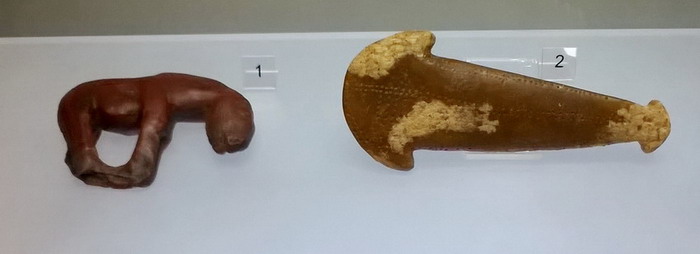
Pic.1 A figurine of a horse dating 7,000-3,500 B.C. (a copy),
and a pendant dating 4,500-1,800 B.C. (a copy), MHMG Gdansk
Pic.2 Tutankhamun's breastplate with four amber
pendants on the bottom, 1333-1324 B.C.
The Museum of Egyptian Antiquities in Cairo

Roman emperors also appreciated the strange warm stones with trapped fragments of plants or small oranisms, regarding them as precious and lucky.
Roman, Greek and Egiptian traders would risk their lives to get the gold of the north from the hostile northern teritories of barbaricum. The Roman empire controlled all the known amber trading routes through the Mediterranean. The routes became known as the amber road, which crossed Europe from the north to the Adriatic Sea by the first century A.D. along which large quantities of amber were imported to Mediterranean countries in exchange for gold, coins, iron, tin, Murano glass, slaves, animal skins, cattle, and ceramics. People at the time used amber for making jewellery, amulets, decorating interiors and weapons, and very often for medicinal purposes. Egiptians called it the stone of life and health, and beautiful Roman ladies believed that contact with amber would preserve their youth. ( Schulz, Überhuber, 2001). It was very precious and hence it advertised their economic status. Pliny, a Roman author and natural philosopher, once complained that a small amber statuette cost more than a healthy slave. (Richardson, Popiel, 2012)
Characteristics
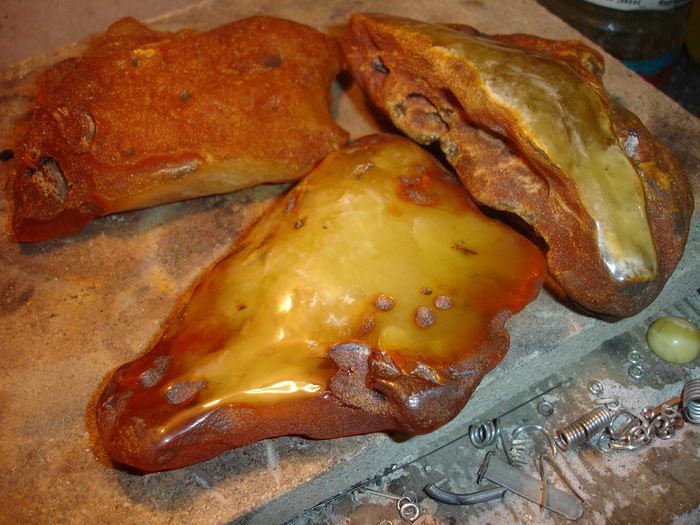
Natural Baltic Amber has unique properties, unlike any other amber in the world. It’s much harder, visually more interesting and variable. The spectrum of its colours can range from brown, red and yellow to green , blue, black and even milky white. (Pic.3)
The abundance of amber colours, appearances and its plasticity, make it sought after and a valuable material in jewellery making and the decorative arts.
Pic.3 Raw and polished amber of different colours
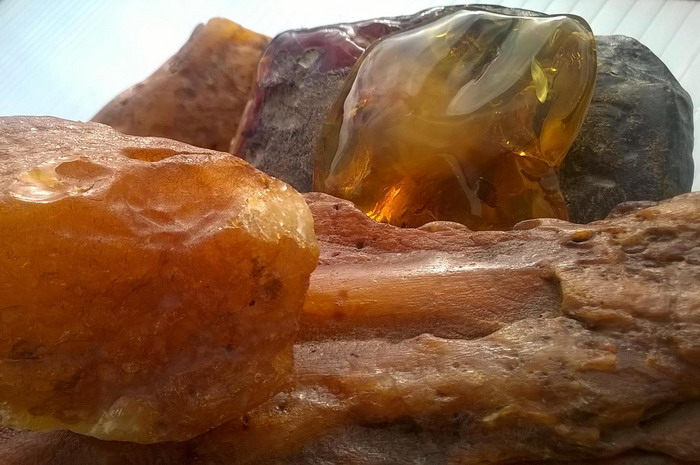
It can vary not only in colour but also in degrees of transparency, and the internal veins, stress cracks, cloudiness, bubbles and possible organic inclusions make it beautiful and special. The opacity and lightness of its colour depends on the ammount of fine air bubbles in the resin, and if there is more than 50% of them, the amber appears milky white. The colour is determined by two major factors: the amount of debry and the conditions of the environment the amber was deposited in.
Amber oxidizes when exposed to humidity, air and heat, and it evolves in colour as a result - from yellow to orange, red and brown. With time the surface becomes cracked and it is covered by an oxidized layer called the bark. ( pic.4 and 5)
Pic.4 A raw piece of amber with clearly visible oxidized surface called ‘the bark‘
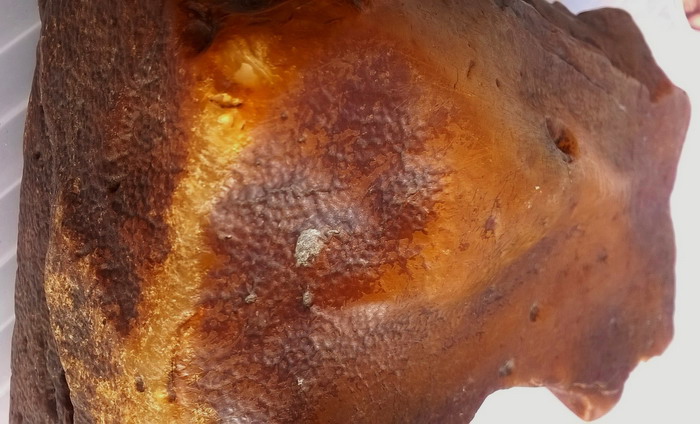
Pic.5 Stripping amber’s oxidized bark reveals its true colours hidden within
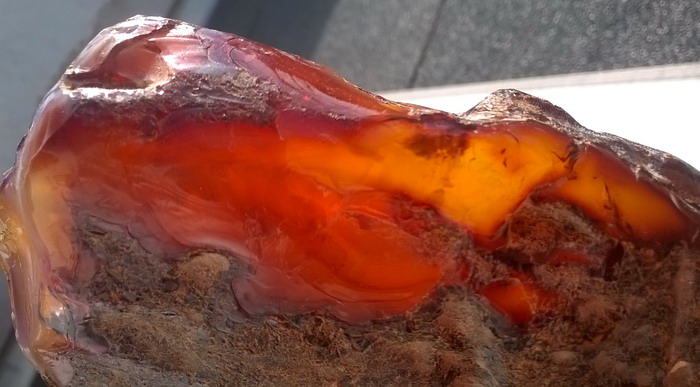
You can often see impressions of tree bark or fragments of tree twigs preserved in unpolished pieces of the fossilized resin. Throughout the millions of years of it‘s existance, it was heated in hot sandy dunes, ventilated in various humid conditions, exposed to a range of chemicals from the surrounding environment, and finally pressed by glaciers.
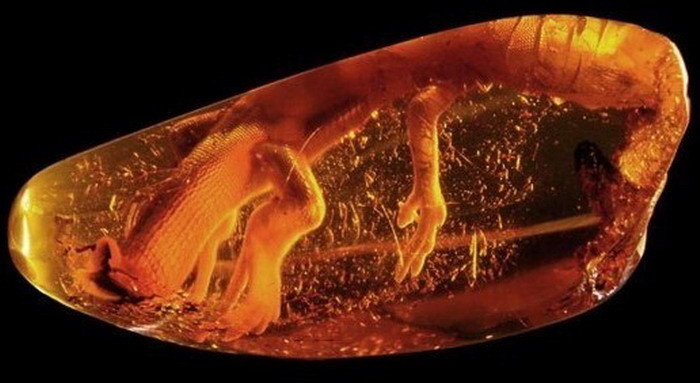
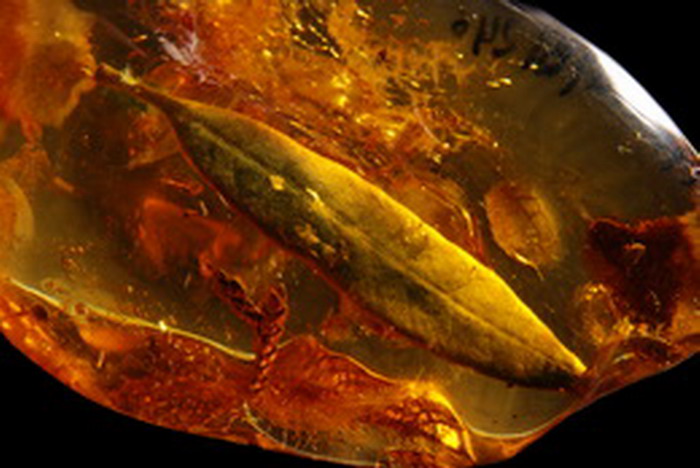
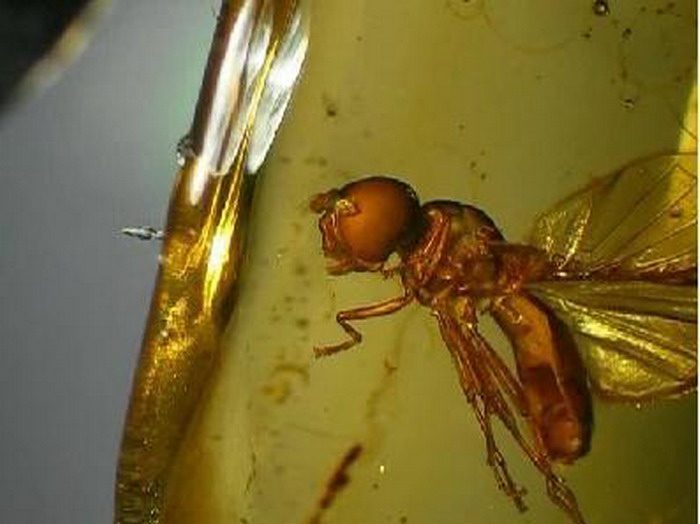
Some pieces can contain botanical and animal inclusions that were trapped by the sticky resin and mummified as a result. This not only adds to the beauty, but is also of a potential scientific value. (Pic.6,7 and 8)
Pic.6 Asmall animal inclusion, so called Gierłowska’s lizzard
Amber Museum, Gdansk
Pic.7 A leaf preserved in amber, Pic.8 A perfectly preserved insect inclusion,
Amber Museum, Gdansk Inclusion Museum, Gdynia
Amber‘s softness makes it extremely easy to cut and polish. It is also light and will float in salty water. Amber is also capable of storing an electrical charge when rubbed against rough fabric, attracting lightweight particles, and it was for this property that electricity derived its name from. Amber was called elektron (ήλεκτρον) by the ancient Greeks, and it might have come from a Phoenician word elēkrŏn, meaning 'shining light'.
Jewellery
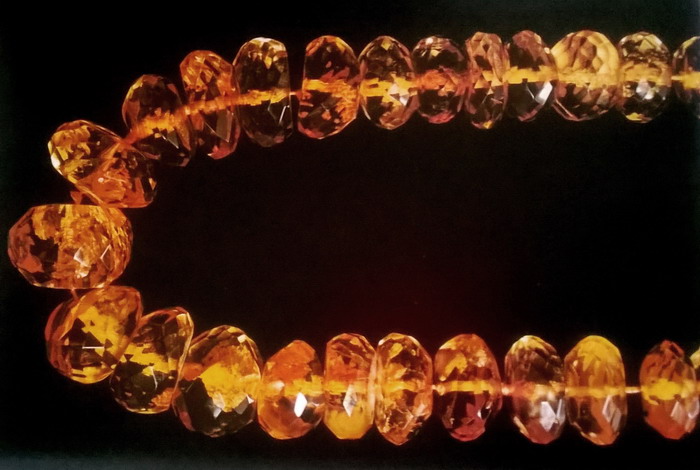
Diamonds and pearls are beautiful, but regardless of their size and precious metal they are mounted with, they always look the same, and despite suttle varieties of colours, they will never surprice. The oldest known diamond only dates back to 12th century (Briolette of India), while amber, with it‘s appealing colours, range of varieties and tactile qualities, has been a prestigious and sought after jewellery and carving material since the earliest period in human history – the Palaeolithic period for over 12000 years (Craddock, 2009). It can be carved, polished and even facet-cut, despite it‘s softness. Amber composes beautifully with precious metals, as well as ordinary leather or wood. Each piece of Baltic amber jewellery is a unique artistic object as each piece is different. (Pic.9, 10, 11 and 12)
Pic.9 Dorota Kos - necklace Deseczka, Pic.10 Aleksander Gliwinski – necklace
2005, amber and black oak, Polish Golden Autumn,2003, amber,
MHMG Gdansk silver, leather, Amber Museum Gdansk
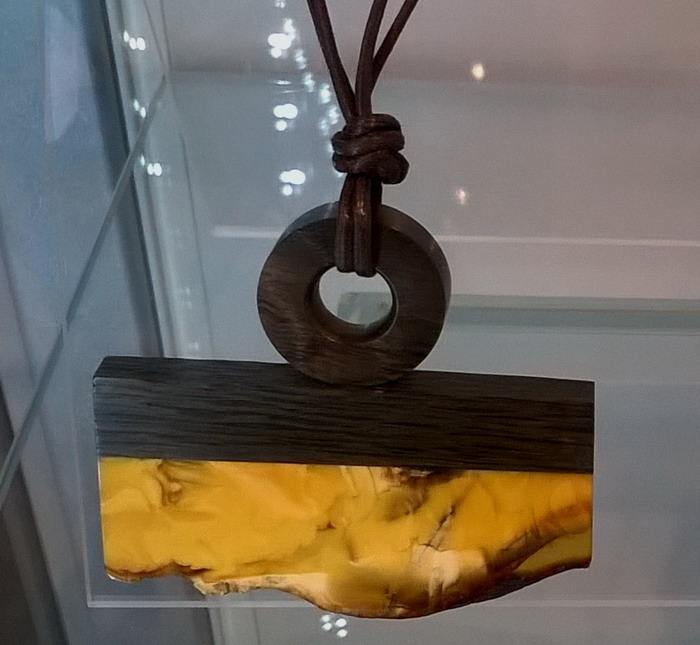
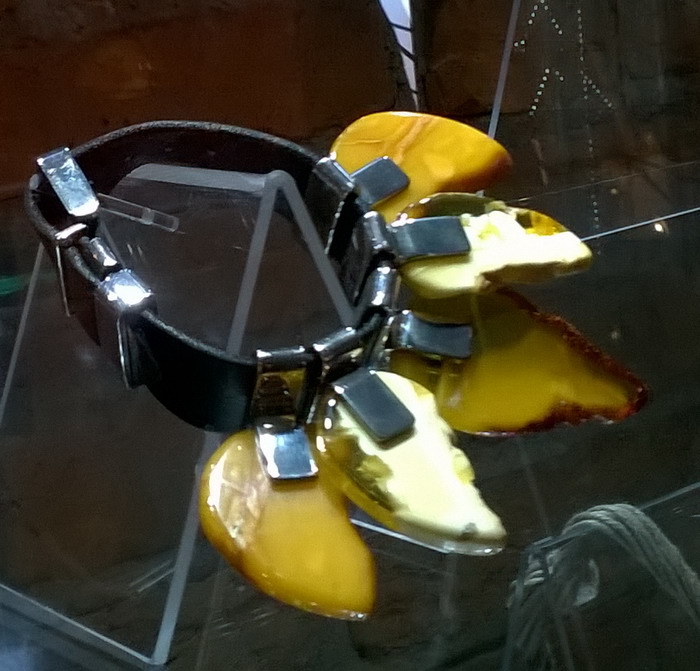
Pic.11 A necklace of facet-cut clear Baltic amber
Pic.12 Fabergé egg – Millennium, Victor Mayer Company, 1997
Amber, gold, enamel, diamonds, rubies and sapphires, 213g
A gift from V.Mayer Company to the city of Gdansk for its 1000th anniversary,
Amber Museum Gdansk

Healing
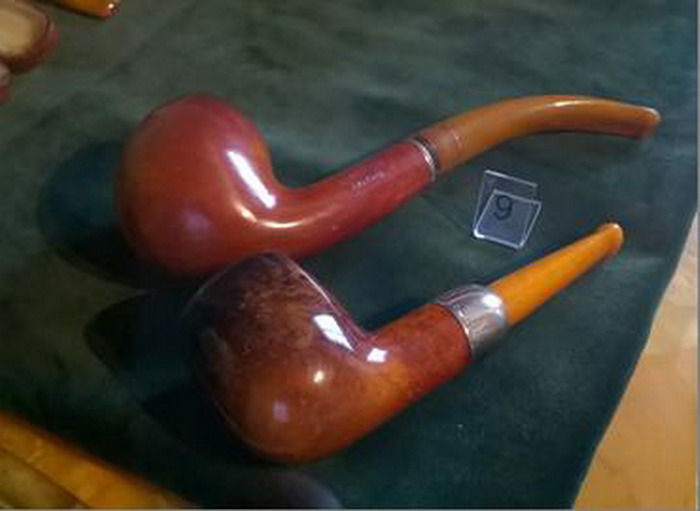
Baltic amber is also very beneficial to humans, and has a reputation for being a powerful healer and cleanser since antiquity. It was used to treat many conditions and was traditionally administered as a powder blended with honey, rose oil or mastic. In Medieval prescriptions it appeared very often, usually in a form of tincture mixed with beer, wine and water, and was supposed to cure indigestion, rheumatic pains, and lessen the effect of viper venom poisoning. In the Middle Ages smoke from burning amber was used to fumigate houses to prevent their inhabitants from widely spreading, at the time, deadly plages. In the modern period it was also used to treat many ailments related to the urinary track, strokes, comas, rheumatisms, colic, typhus, podagra, lung deseases, cardiovascular problems, and to increase blood coagulability. In the 19th century every pharmacy sold creams, balms and other amber based medicines. Medical effects were also supposed to be obtained by wearing amber bracelets and necklaces (Pic.12) and rubbing the body with large lumps of amber. As it was atributed with antibacterial properties, spoons, mouth-pieces of pipes, cigarette holders and tea boxes were often made of amber. (Pic.14)
Pic.13 Antique amber jewellery, Amber Museum Gdansk
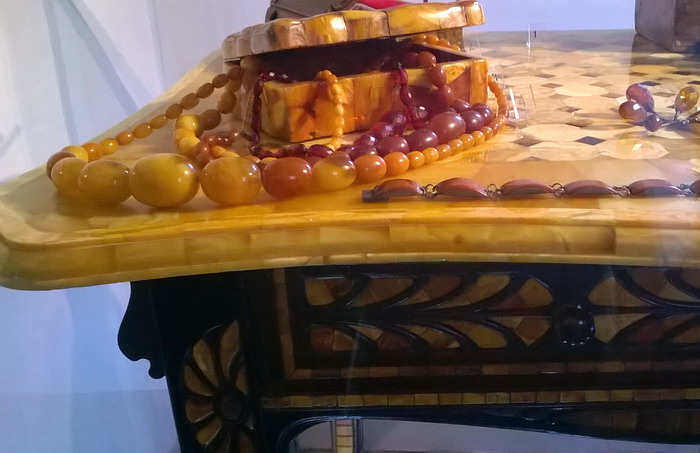
Pic14 Antique pipes with amber mouth-pieces, 19-20th century,
briar wood, amber and silver, MHGM Gdansk
Thanks to the high contents of succinic acid (a powerful antioxydant and scientifically examined medical substance that fights toxic free radicals), it stabilizes cardiac rhythm, supports neural and immune systems, improves concetration and reduces stress. Succinic acid is concentrated mostly in the amber cortex, therefore unpolished amber has the strongest healing properties. The acid is obtained by the process of thermal decomposition, with amber oil and resin as a by-product.
Amber oil is mainly used to treat rheumatism and the resin is used as a base to produce binding and waterproofing materials, as well as varnish traditionally used in violin malking. In the past, amber resin was also widely used by artists for varnishing paintings.
Amber‘s considerable bactericidal and electrostatic properties also play a beneficial role. We are surrounded by all sorts of electrical devices which affect our body, but we can protect ourselves against their negative influence by wearing amber jewellery. When warmed up, amber molecules emit negative ions, positively influencing the human organism by rebuilding its disturbed electrostatic field . It also acts as a geopathic stress shield , neutralizing harmfull geopathic radiation of the earth around us, like the one emanated by water veins for example.
Baltic amber serves as a natural pain killer (reduces or eliminates pain associated with teething, headaches, joint stiffness, rheumatism etc.)
It is applied in treating rheumatic and thyroid ailments, discomfort linked to throat, ear and stomach irritations, as well as fevers and colds. It energizes the endocrine system and is reputed to cleanse the blood. It has been used in the cosmetic industry as well.
Magic
The magic properties of amber have a long history, as far as the Stone Age period. People made talismans and, depending on their shape, they were linked with ancient cults, like the solar cult - round talismans with cross shaped dots, the combat axe cult – small axes protecting from misfortune, or the female figures atributed to fertility cult. There were good luck talismans for hunters and foundation offerings before building a house, and in general amber was thought to ensure good health and prosperity. People believed in its magical power of balancing the emotions, clearing the mind, releasing negative energy, and easing stress by clearing phobias and fears.
Baltic amber was used from antiquity to clear the house and body from negative energies, curses, potential ilnesses etc, and protecting from negative psychical sources. It is recommended that you rinse your amber jewellery occassionally under running water or soak in water with sea salt to clean off the bad energies that collected.
Natural amber has a negative electrical charge when rubbed, resin smell when heated, even warmed in hands – a distinctive smell of some church celebrations. Most of all, it is a lovely warm stone to wear, a stone which is alive and is constantly changing – the living gemstone.
Each piece of amber is a drop of sunshine with energy that was being acumulated within for millions of years.
Arts and crafts
Baltic Amber is highly prized for its exceptional quality. It is neither a mineral nor a stone, as it has an organic origin – it is an organic gem.
Pic.15 Large lumps of raw amber on a craftsman’s table
Since the 8th century amber processing has been a dominant craft in the area of its occurance – the south coast of the Baltic Sea, focusing initially mainly on production of the devotional objects. When Gdansk was established in 10th century, it took interest in amber craft right from the start. During the rule of the Tutonic Order (14-15th centuries) amber craft was forbiden and hiding amber stones was punishable by death. During the second half of the 15th century, the Polish king Kasimir Jagiellon contributed greatly to the development of amber craft.
The 16th and 17th centuries brought the rebirth of the craft, and by then Gdansk workshops received orders from nobleman, Polish kings, and European courts, with French king Luis XIV as a prime example. The craftsmen would produce various objects at the time: boxes, goblets, vessels, candlestics, jewel cases, cupboards, cabinets, clocks, frames, games and various ornaments.
The works of Gdansk amber craftsmen were among the most precious diplomatic gifts for monarchs, tsars, sultans and caliphs.
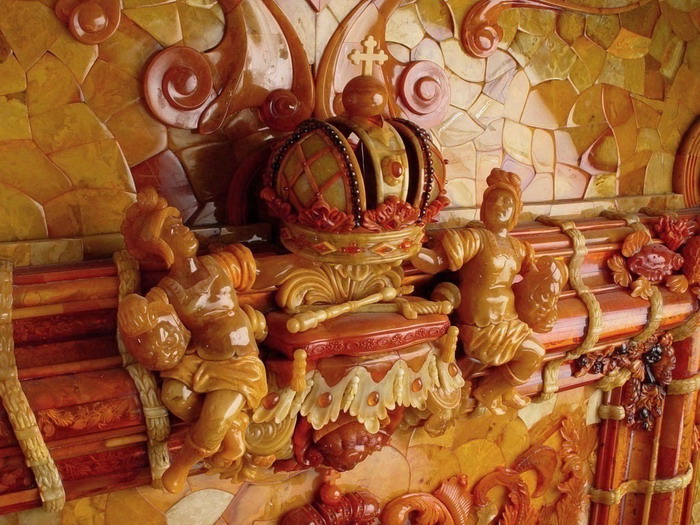
By the end of the 18th century, due to difficulties in obtaining raw amber supplies as it was still traditionally gathered from the seashore, the old amber craft traditions were continued but to a limited degree. In the nineteenth century however, dredging operations began, followed by deep mining enabling production to soar to over a million pounds in weight per annum (Craddock, 2009). The changing architectural fashions and the new techniques encouraged production on a larger scale, allowing craftsmen to imitate stone walls. The technique was used in rendering the famous Amber Room (Pic.16)
Pic.16 A copy of a photograph by Andriej Zjejest of an original Amber Room in the Catherine Palace in Russia, 1917, Archives of the National Museum in Tsarskoye Selo, Russia
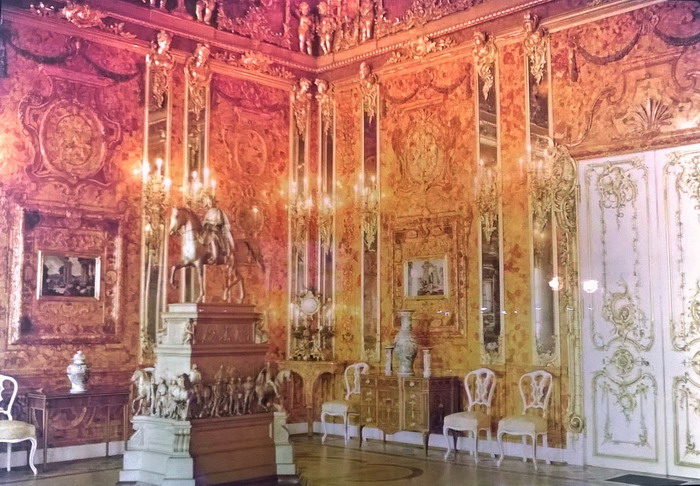
The room itself was designed by Gdansk amber craftsman Andreas
Schlüter and was executed succesively by other craftsmen from Gdansk – Gottfried Wolfram, Gottfried Turau and Ernest Schacht, and it covered an area spanning 86 sq.meters in total.
The story of its fate is very dark since it remains a mistery till this day.
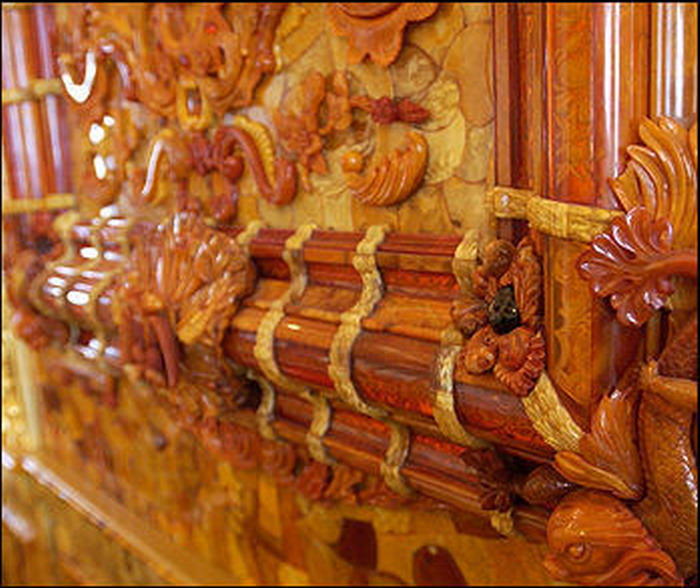
In 2003 a reconstruction of the original room was opened in Tsarskoye Selo near St.Petersburg where it originally belonged. (Pic.17, 18 and 19)
Pic.17 A reconstruction of the Amber Room, Tsarskoye Selo, Russia
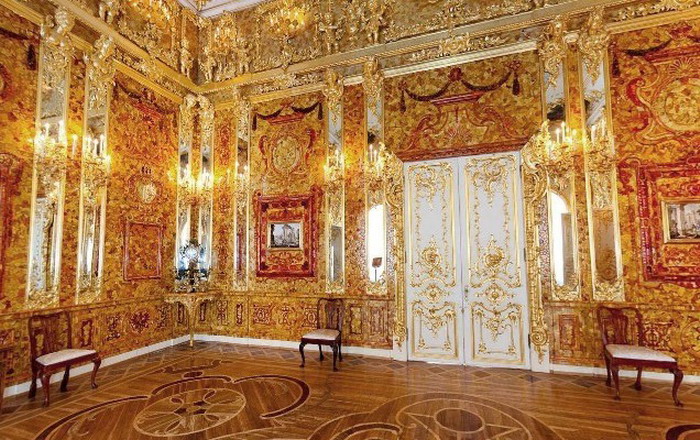
Pic.18, 19 Details from the reconstructed Amber Room
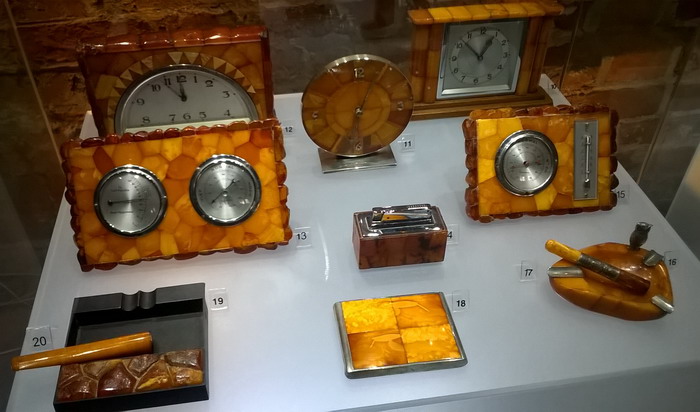
In 1838 the state monopoly over amber was lifted in Prussia, and from then on industrial-scale production began in factories. Stantien & Becker became one of the leading manufacturers of amber at the time. Originating from Konigsberg, Prussia, it mass-produced many articles including smokers accessories, jewellery, and devotional and functional objects like cases, mugs or clocks. (Pic.20)
Pic.20 Mass-producted amber articles of daily use, 18th- beginnung of 20th century,
Amber Museum, Gdansk
After WWII the Gdansk artists and craftsmen began from scratch but it wasn’t until the 60s, when access to raw amber was much easier, that the business started to atract more attention and appreciation for the amber craft. The artists began what later became refered to as the Polish school of joining amber with silver, and the Polish craftsman set up their own organisations (the International Amber Assosiation and the Polish Chamber of Amber).
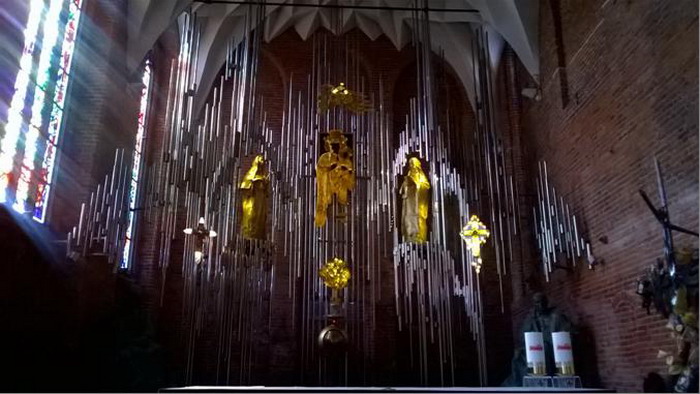
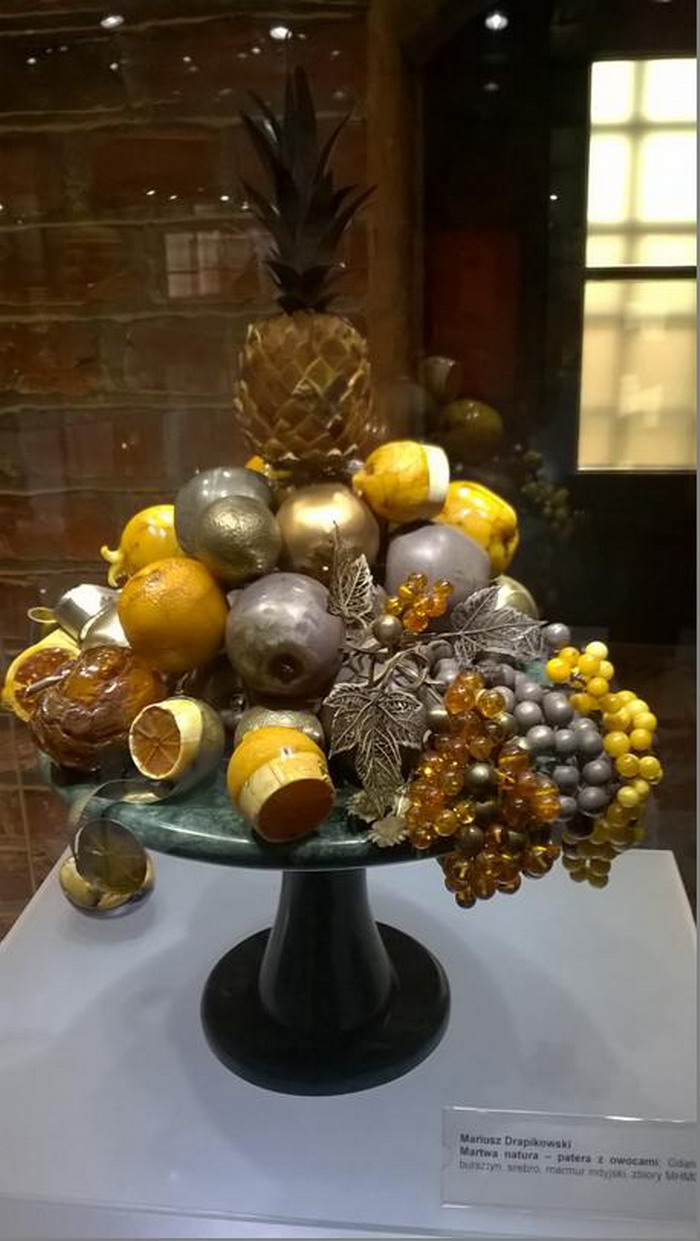
In 2002 the Gdansk amber craftsmen originated the idea of building an amber altar in St.Bridget Church in Gdansk (Pic.23), which would follow the old tradition of building guild altars in churches. There are plans to build an altarpiece exceeding 100 sq.meters, (overtaking the famous Amber Room, the largest to date architectural use of amber), 11 meters high, 6 meters wide and 3 meters deep. The architectural concept of the altar is by a Gdansk craftsman and artist Mariusz Drapikowski. (Pic.21)
Pic.21 Amber altar under construction in St.Bridget Church in Gdansk
Although amber was not popular and almost forgotten in the recent past, mostly due to limited sources, the current years bring its rebirth.. It is now desired across the world with Polish design at the forefront, establishing Gdansk the amber capital of the world. The amber craft in Gdansk has been rapidly developing ever since, along with the it‘s trade and the scientific and cultural understanding of the amber industry. For Pomeranian amber craftsmen, the gold of the north is a never ending inspiration and is being crafted there by hundreds of designers and jewelleres. Pomeranian centuries-long amber craft tradition merges with contemporary trends in design, fashion and technology. Since 1994, Gdansk hosts the world’s largest amber fair- Amberif, with an ever increasing number of exhibitors. For several years, the Gdansk amber craftsmen have also proved highly successful in the European, Far East and American markets.
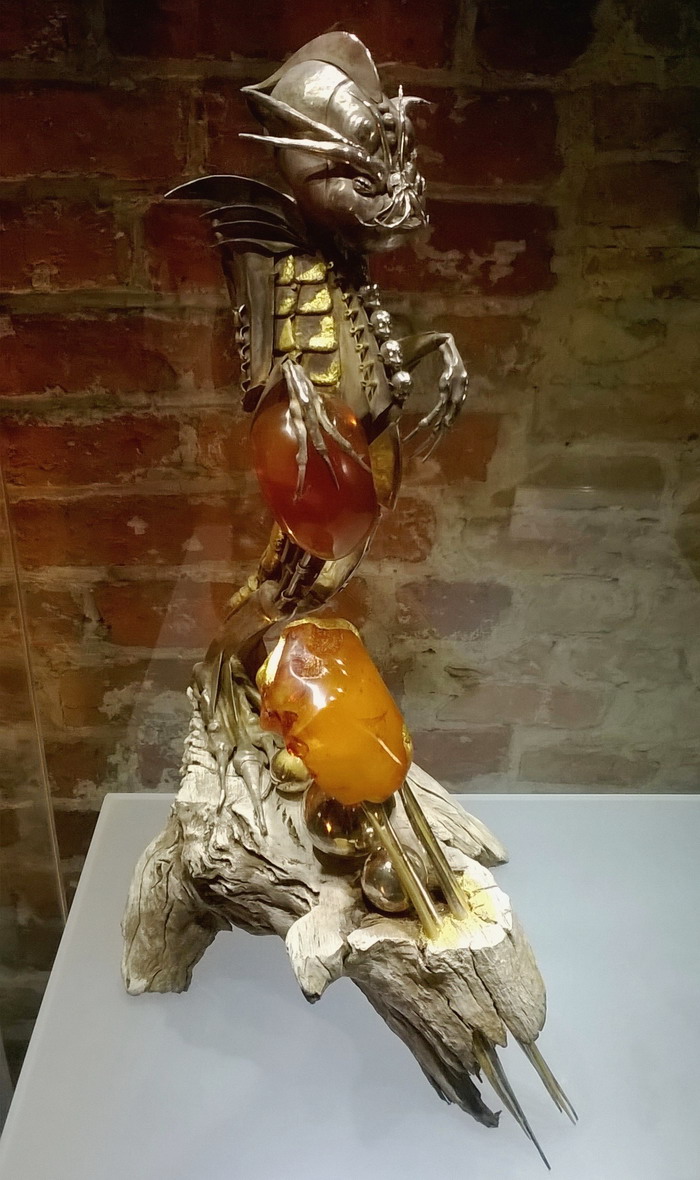
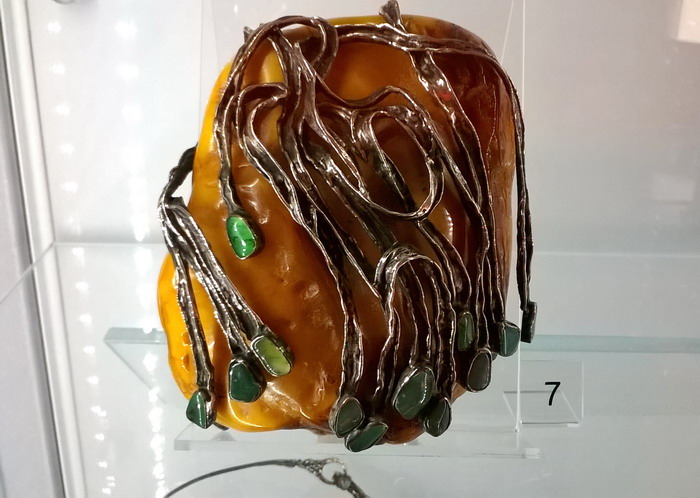
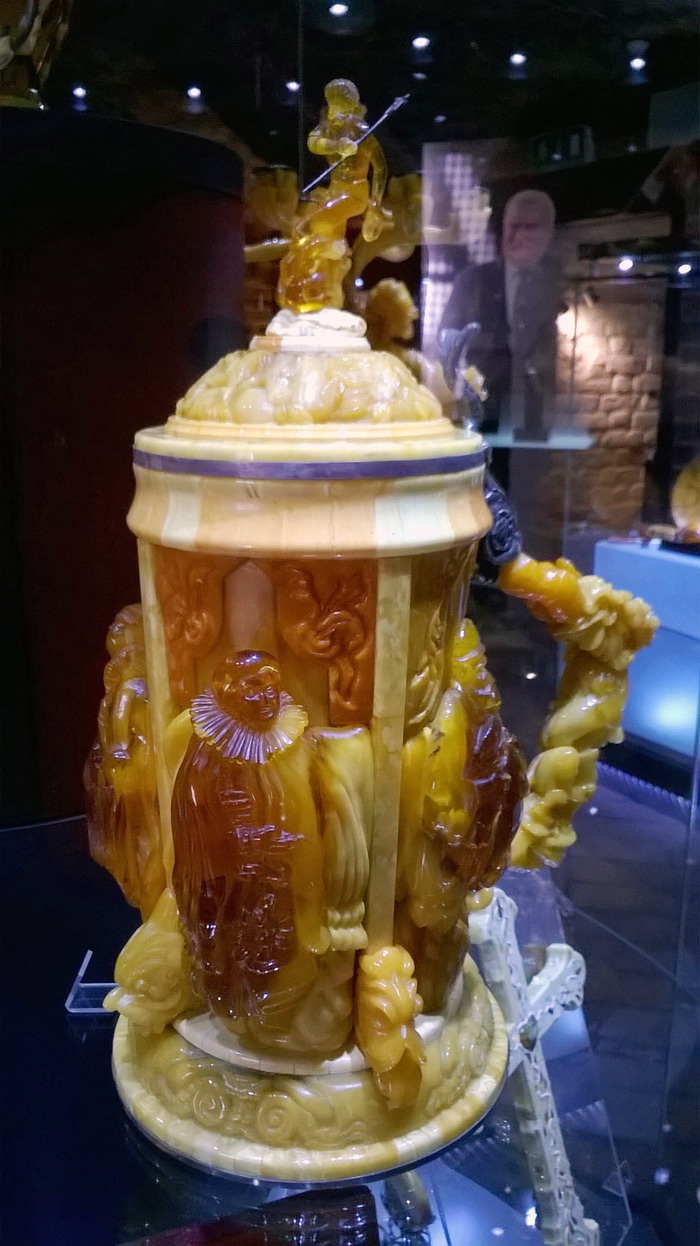
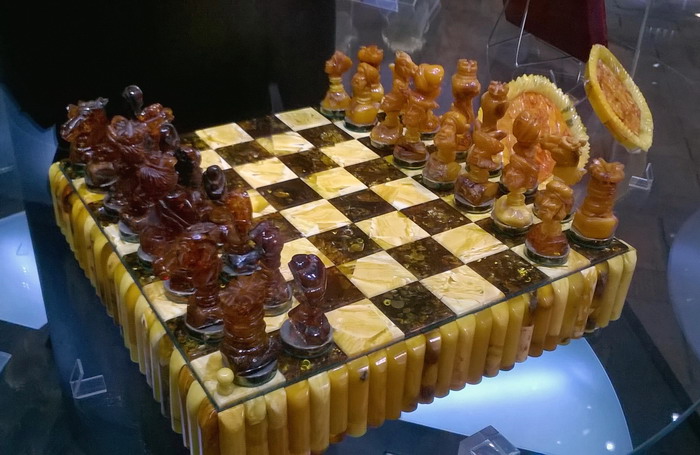
The aboundance of Baltic amber colours, degrees of its transparency and relative ease of processing, also makes it an atractive material for visual arts, decorative crafts and sacral art (Pic.22-26).
Pic.22 Bogdan Mirowski – Alien, amber, silver, mahogany,
2006, MHMG Gdansk
Pic.23 Wojciech Jakubowski- A lump of amber in silver,
1986, amber, nefritis stones and silver, Malbork Museum
Pic.24 Mariusz Drapikowski - Still life – a fruit bowl,
amber, silver and Indian marble, MHMG Gdansk
Pic.25 Lucjan.Myrta – amber beer mug, 1996, MHMG Gdansk
Pic.26 Irena Leonowicz - amber chess set,
Amber, silver, wood, c.1960, Art Amber, Gdansk
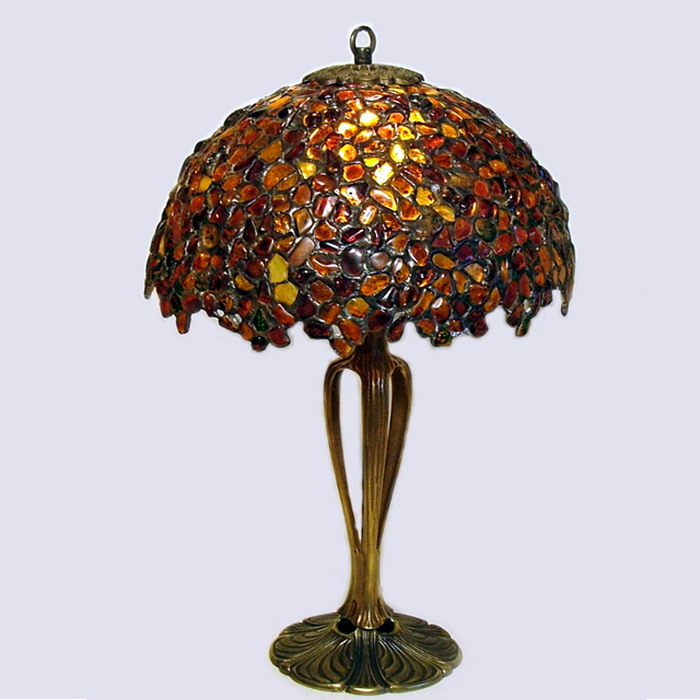
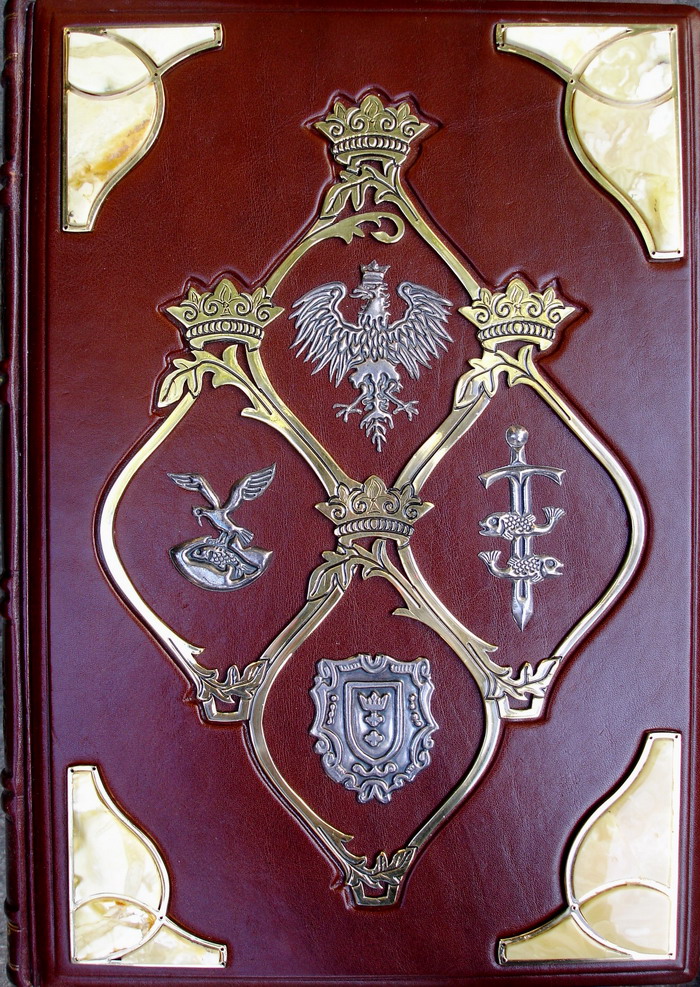
Polish craftsmen and artists have long been reputed for making beautifully crafted amber objects. In Gdansk and the surrounding vicinity, eight thousand people are employed in the amber industry. They handcraft beautifull jewellery and other unique objects like high quality incrustated handbound books (Pic.27), or lamps with multicolour shades (Pic.28).
Pic.27 A leather bound book decorated with white amber,
handmade by a master craftsman Wladyslaw Chumowicz,
2015, Gdansk
Pic.28 An example of an amber lamp